


Most AI-made content has a tell. It was created first and branded later.
Someone swaps the logo, fixes the colors, changes the font, rewrites the copy, and removes the phrases the company would never use.
The result may become on-brand. The process is not.
Your brand is not a finishing layer. It shapes every word, frame, and interaction. It determines what you say, how you say it, and what you leave out.
Brand memory keeps your identity and voice present from the moment you start a project through the edits that follow.
Put brand choices at the start
Every product demo or walkthrough brings a familiar set of brand decisions.
Which logo belongs on a dark background? Which color should draw attention? Should the writing feel conversational or restrained? Which product terms are required? Which phrases should never appear?
When those answers live in people’s heads or in scattered documents, each project begins with the same cleanup.
Brand memory gives those choices a home inside Layerpath. Your team can spend less time repairing generic output and more time making the explanation useful.
Keep identity and voice together
Brand memory lives at the workspace level and has two parts.
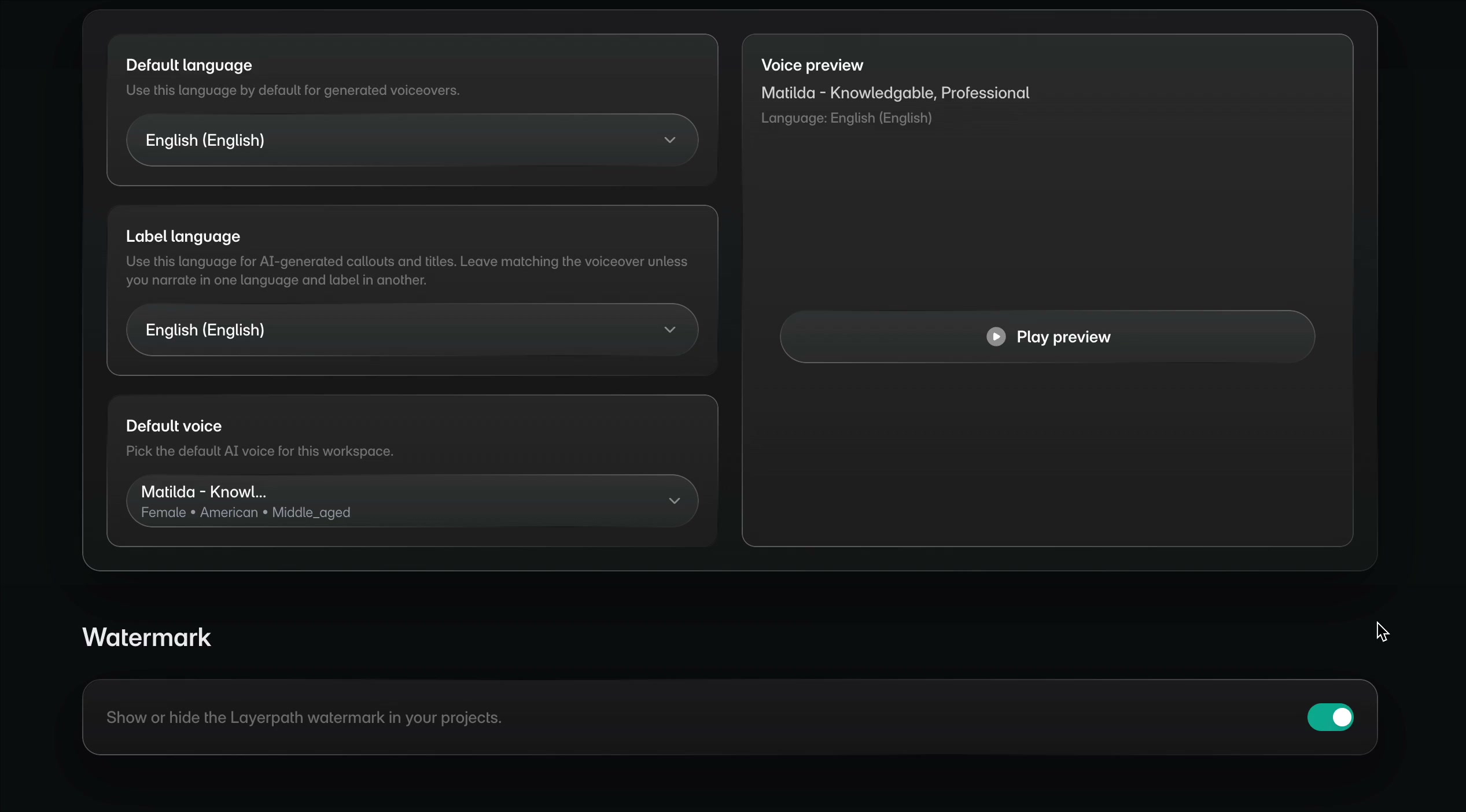
Identity covers the defaults that shape how your projects appear and sound: logos, colors, icons, fonts, language, default voiceover, and watermark settings.
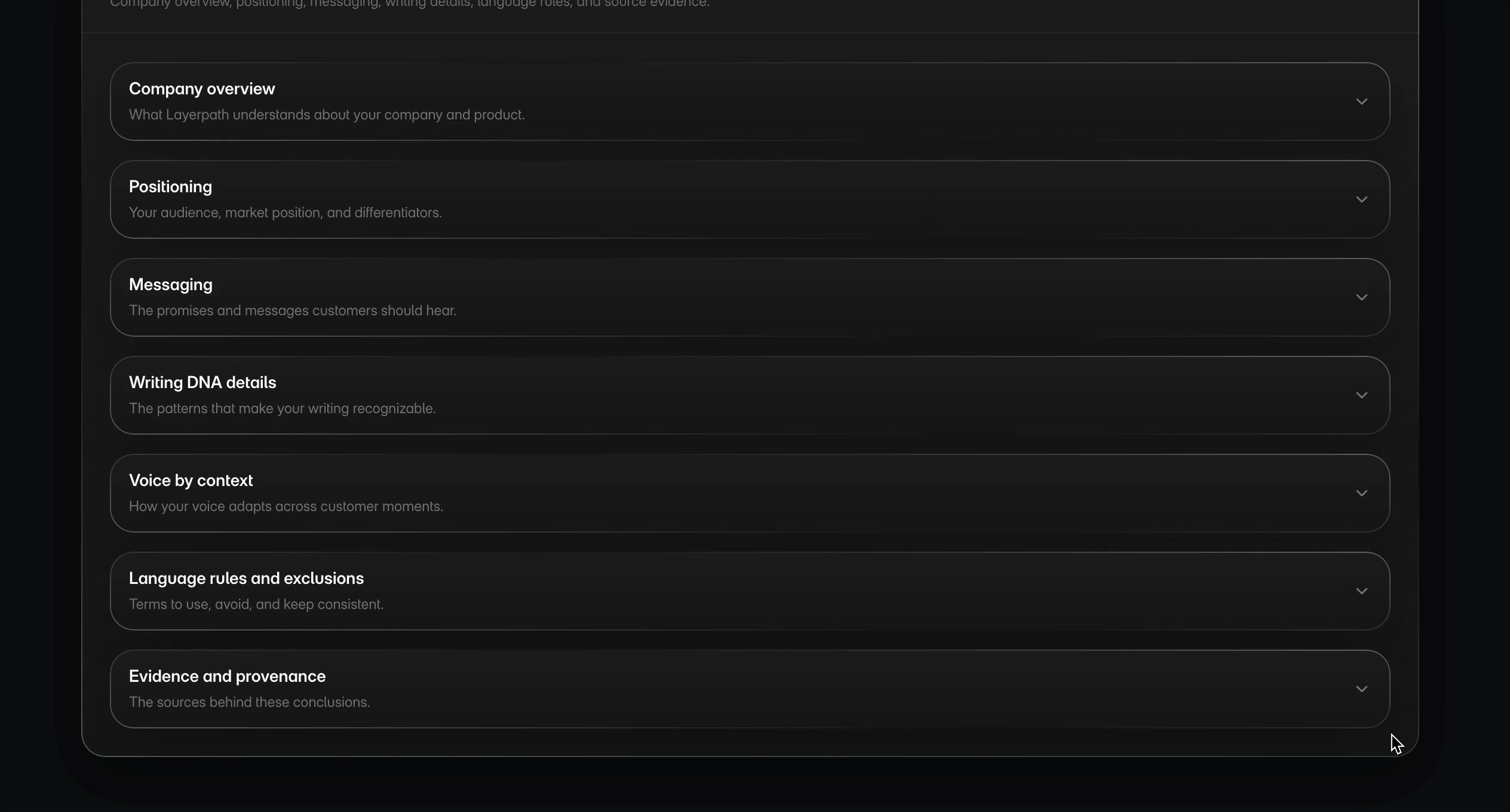
Voice covers how your company communicates: writing style, tone, mechanics, preferred and avoided words, and how the voice shifts between a product walkthrough and customer onboarding.
Together, they give Layerpath specific guidance to work from.
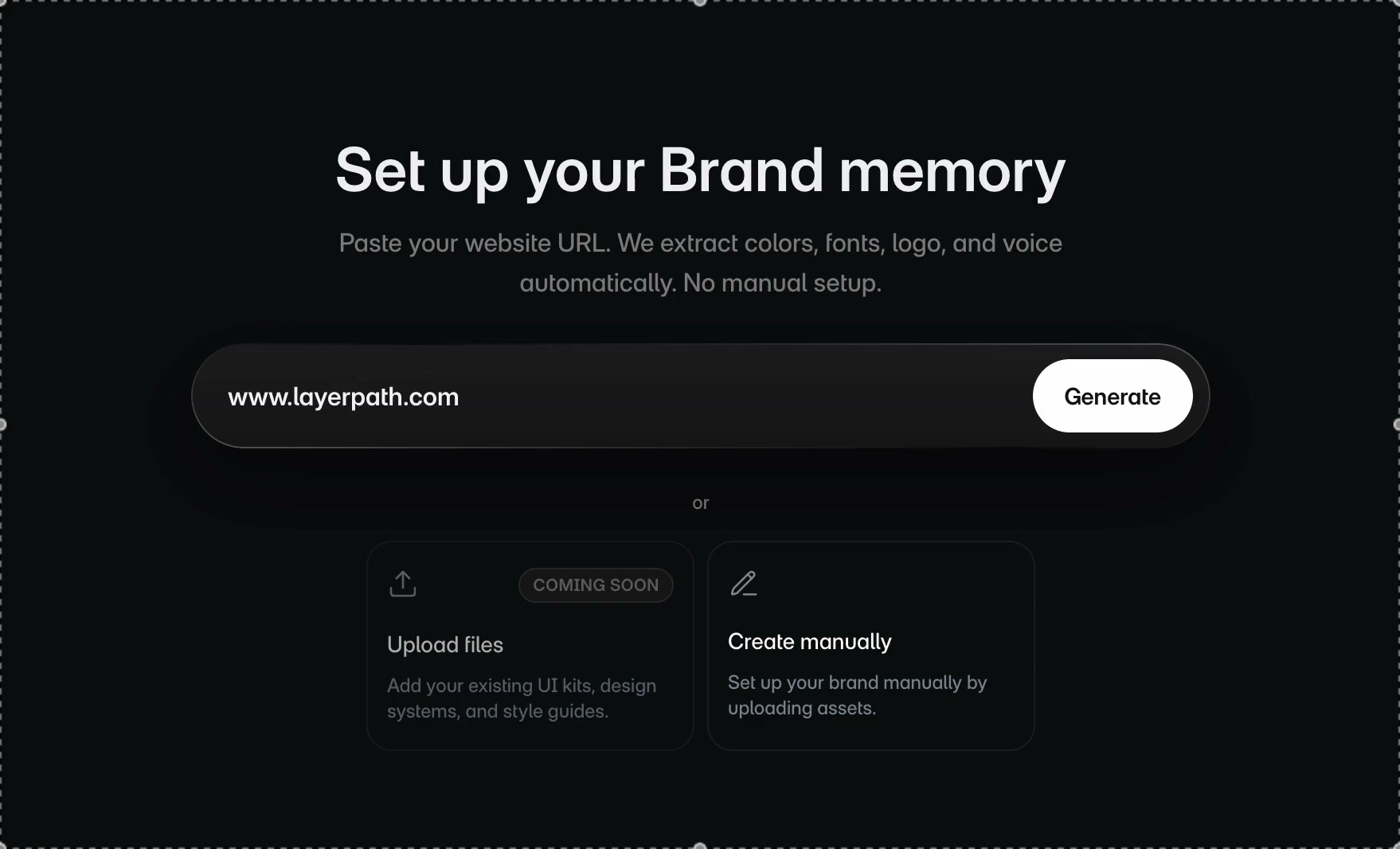
Begin with your website
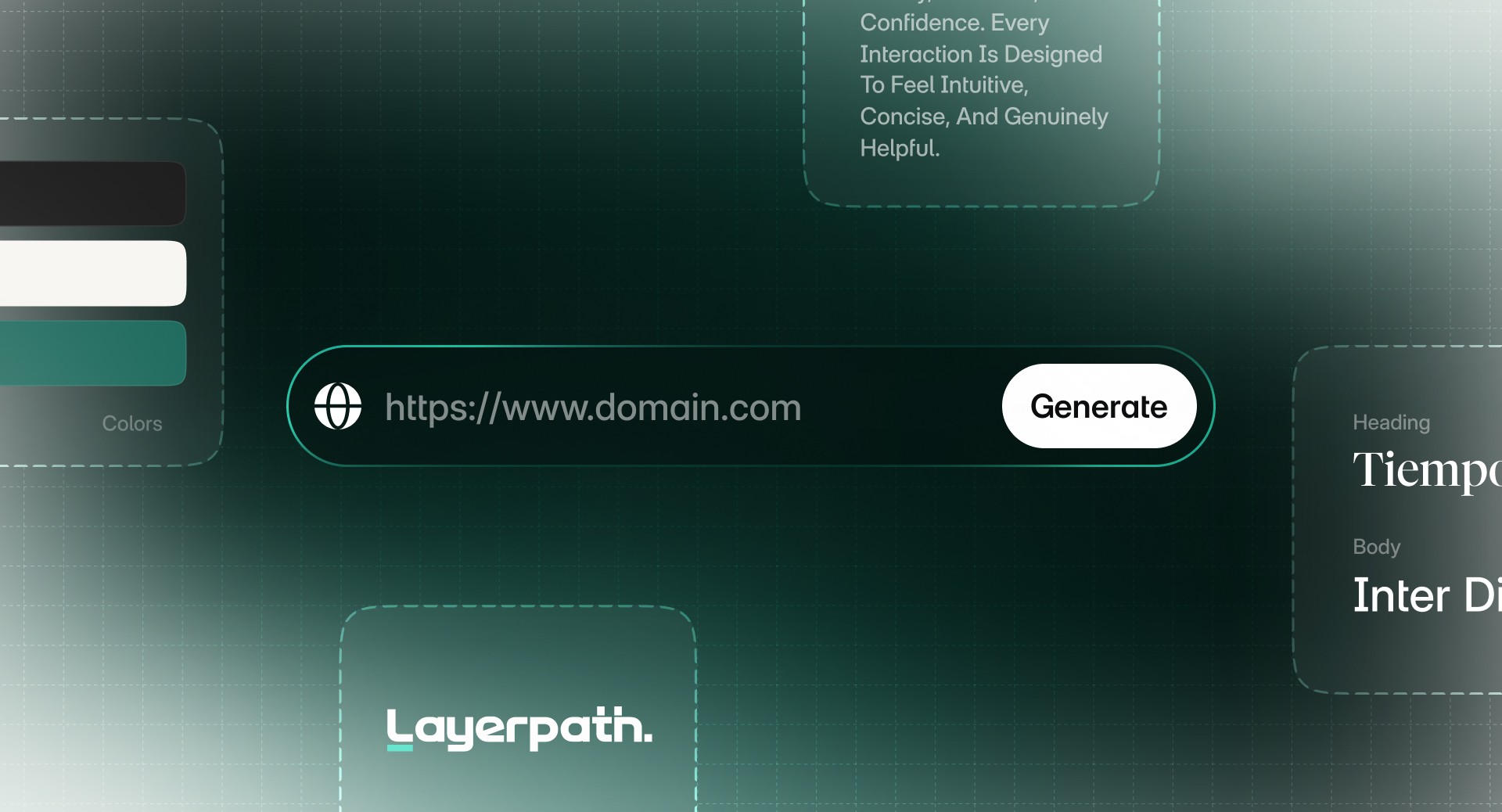
Your website gives Brand memory a starting point.
Add it and Brand memory begins identifying logos, colors, fonts, and other visual details. Your identity can be ready to review in seconds.
Voice takes a little longer. Brand memory studies how your company writes and emails you a report. You can close the page while it works.
The report analyzes your writing style, tone, and terminology, with examples that show the guidance in practice. Review it, correct what it missed, and save the guidance that feels right. Nothing applies before you approve it.
Identity is more than a logo
A logo can identify your company without making the whole experience feel like yours.
Recognition comes from the system around it: how colors work together, which typefaces carry hierarchy, what language viewers see, which voice sounds like your brand, and whether a watermark appears.
Brand memory puts those choices side by side so you can review them as one system, not a list of settings to fix later.
Voice needs rules, not adjectives
“Clear, friendly, and professional” could describe almost any company. It gives a writing system very little to act on.
A useful voice has edges. It has preferred words, avoided phrases, recognizable sentence patterns, and clear shifts for different situations.
Brand memory records those specifics and shows you how they sound in practice. If an example feels stiff, vague, or unlike your team, correct the guidance once instead of fixing the same problem in every project.
Layerpath remembers only the feedback you choose to save.
Create with more context
Brand memory brings that context into project creation and edits with Agent.
With recurring brand decisions documented, each project can begin closer to how your company already communicates. Your team can focus on the explanation:
- What does the viewer need to understand?
- Which moments deserve emphasis?
- What can be removed?
- What should the viewer be able to do next?
Brand memory does not replace your team's taste. It turns that taste into rules you can apply everywhere.
What to expect during Beta
Brand memory is in Beta. Some settings may appear differently across shared and exported outputs. Three guardrails remain constant.
You decide what it learns
Brand memory learns only from feedback you explicitly approve. It does not treat every edit as a new brand rule.
Nothing changes behind your back
Website findings and corrections stay in review until you save them. Published projects keep the brand they shipped with. Workspace changes do not silently rewrite work customers have already seen.
Voice takes a little longer
Visual identity can be ready in seconds. Writing voice takes a few minutes and arrives as a report in your inbox, with examples you can review and share.
Check each project before publishing. If the result falls short of the rules you set, tell us. Your feedback helps improve Brand memory without making assumptions on your behalf.
The goal is simple: less time repairing generic output, more time shaping work that already feels like yours.